 CookEase
Baking and Roasting Explained
February 2026 | Educational Article
Dry Heat Cooking Methods
Baking and roasting are cooking methods that use dry heat in an enclosed environment, typically an oven. Both techniques rely on hot air to cook food and have been fundamental to food preparation in many cultures. This article provides an educational overview of these methods and their characteristics.
Baking Explained
Baking is a cooking method that uses dry heat in an oven to cook food. The heat surrounds the food from all sides, cooking it evenly through the circulation of hot air. Baking has been used for thousands of years and remains a common cooking technique today.
Characteristics of Baking
In baking, food is placed in an oven where it is exposed to consistent dry heat. The temperature is typically controlled and maintained throughout the cooking process. Heat is transferred to the food through the air and the baking vessel.
Baking is commonly used for bread, pastries, casseroles, and vegetables. The method can create different textures depending on the temperature, duration, and type of food. Moisture in the food often evaporates during baking, which can affect the final texture.
Temperature Ranges in Baking
Baking can occur at various temperatures depending on what is being prepared. Lower temperatures may be used for delicate items, while higher temperatures might be used for foods that benefit from a crispy exterior. The temperature is usually maintained consistently throughout the baking process.
Roasting Explained
Roasting is similar to baking but typically involves higher temperatures and is often used for larger pieces of food. Like baking, roasting uses dry heat in an oven to cook food. The term is commonly associated with vegetables and certain proteins.
Characteristics of Roasting
Roasting generally uses higher heat than baking, which can create browning on the surface of food through a process called the Maillard reaction. This browning can affect both the appearance and flavor of the food.
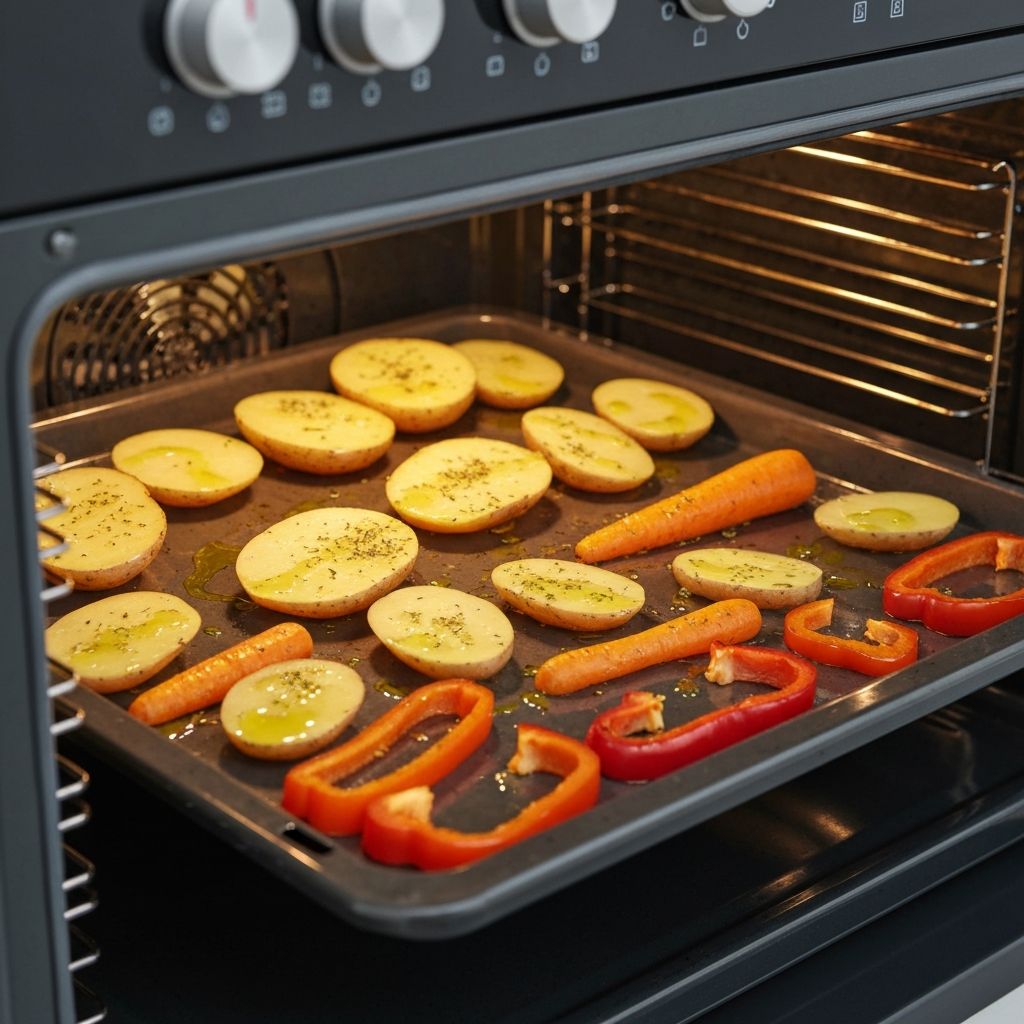
The food is typically placed in a roasting pan or on a baking sheet, often with some space around it to allow air circulation. Some people add small amounts of oil or other ingredients to the food before roasting.
Common Roasted Foods
Roasting is frequently used for root vegetables like potatoes, carrots, and beets. It is also applied to various other vegetables and foods. The high heat and dry environment can create a caramelized exterior while cooking the interior.
Comparing Baking and Roasting
While baking and roasting are similar methods that both use dry oven heat, they are often distinguished by temperature and application. The terms are sometimes used interchangeably, and the distinction between them is not always precise.
Generally, baking is associated with bread, pastries, and casseroles at moderate temperatures, while roasting is linked to vegetables and higher temperatures. However, these are loose conventions rather than strict rules, and usage varies across different cooking traditions.
Heat Transfer in Dry Cooking
In both baking and roasting, heat is transferred primarily through hot air and radiation from the oven walls. The baking vessel can also conduct heat to the food. This combination of heat transfer methods cooks the food from multiple angles.
The circulation of air in the oven helps distribute heat evenly. Some modern ovens have fans to improve air circulation, which is often called convection cooking. This can affect cooking times and temperatures.
Effects on Food
Dry heat cooking methods like baking and roasting can change food in various ways. Moisture evaporation can concentrate flavors and change textures. The high heat can cause browning reactions that affect taste and appearance.
Different foods respond differently to these methods. Vegetables may soften and caramelize, bread may develop a crust, and the interior moisture content of foods may decrease. These changes are part of how dry heat cooking transforms raw ingredients.
Practical Considerations
Baking and roasting require an oven and appropriate cookware. The temperature and duration must be considered based on the specific food being prepared. Many factors can influence the outcome, including oven accuracy, food placement, and the characteristics of the ingredients.
Ovens can vary in how they heat and maintain temperature. Getting familiar with a specific oven's behavior is often part of using these cooking methods effectively. Adjustments may be needed based on individual circumstances and equipment.
Educational Context and Limitations
This article provides educational information about baking and roasting as cooking methods. The content describes general principles and characteristics of these techniques for informational purposes only.
This information does not constitute cooking instructions, nutritional advice, or personalized recommendations. Individual equipment, ingredients, and preferences vary significantly. Decisions about food preparation methods should be based on personal circumstances and appropriate judgment.
Educational content only. No medical services. No promises of outcomes.